
GermanyRussia–Ukraine War
 Germany
 calls for Russia to be held accountable at the OPCW after a Ukrainian report on chemical weapons near Illinka
Berlin cited a Ukrainian investigation into the use of the riot control agent CS near Illinka in September 2024. The OPCW circulated the report at Kyiv’s request; the organisation itself has not named who was responsible.

Germany accused Russia of grave breaches of the Chemical Weapons Convention and called for Moscow to be held accountable at the Organisation for the Prohibition of Chemical Weapons (OPCW). The trigger was a Ukrainian national investigation into the use of the riot control agent CS near the village of Illinka in the Dnipropetrovsk region on 20 September 2024, whose report the OPCW Technical Secretariat circulated to the Convention’s States Parties.
German Federal Foreign Office@germanydiplo
Germany: Russia must answer at the OPCW for chemical weapons in Ukraine
The German Foreign Office said Russia commits grave breaches of the Chemical Weapons Convention and must be held accountable at the Organisation for the Prohibition of Chemical Weapons (OPCW). Berlin cited a Ukrainian investigation which, it said, found "clear evidence" of the use of prohibited chemicals.
Ukraine's report on the use of the CS riot control agent near Illinka on 20 September 2024 was circulated to the Convention's States Parties by the OPCW Technical Secretariat at Kyiv's request, Ukrainian Foreign Minister Andrii Sybiha said.
“Russia continues its relentless war against Ukraine and commits grave breaches of the Chemical Weapons Convention. A Ukrainian investigation has found clear evidence of the use of prohibited chemicals. Russia needs to be held accountable at the OPCW,” the German Federal Foreign Office wrote on X on 18 November.
What the Ukrainian report says
Ukrainian Foreign Minister Andrii Sybiha said on 17 November that, at Kyiv’s request, the OPCW Technical Secretariat had published and circulated Ukraine’s national report on the Illinka incident to all States Parties. According to Sybiha, the investigation, carried out with technical expertise provided by the organisation, established Russian military involvement and traced the munition through an organised production and supply chain.
Sybiha also said Ukraine has documented more than 14,000 cases involving Russian munitions containing hazardous chemical substances. He called on the OPCW and its States Parties to establish an effective attribution mechanism and to prevent Russia’s return to the organisation’s Executive Council. The findings on Russian military involvement and the number of cases come from the Ukrainian side; the OPCW has not published its own conclusion on who was responsible for the incident.
What the OPCW found in 2024
The Illinka incident had already been the subject of an OPCW technical assistance visit requested by Ukraine. In a report of 18 November 2024, the organisation said two of its designated laboratories, separately and independently, had confirmed the presence of CS in a grenade and in soil samples from a trench. CS is a riot control agent whose use as a method of warfare is prohibited under the Convention.
At the time, the OPCW stated explicitly that the report did not seek to identify the source or origin of the chemical.
Moscow’s position
Russia has repeatedly denied using chemical weapons in Ukraine. Moscow describes the information provided by Kyiv as untrustworthy and unsupported by concrete evidence, and in turn accuses Ukraine of using toxic chemicals, the Turkish agency Anadolu reports. At the time of publication, Flank had found no official Russian reaction specifically to the Ukrainian report on Illinka.
Sources
4 primary or official1 secondary report
Primary / Official
German Federal Foreign Office · x.com
Russia continues its relentless war against Ukraine and commits grave breaches of the Chemical Weapons ConventionPrimary sourceGovernmentAndrii Sybiha · x.com
Russia’s systematic use of toxic chemicals as weapons in its war against Ukraine is a grave violation of the Chemical Weapons ConventionPrimary sourceGovernmentOrganisation for the Prohibition of Chemical Weapons · opcw.org
S/2338/2024: report on the technical assistance visit requested by Ukraine (Illinka, 20 September 2024)Primary sourceOfficial agencyMinistry of Foreign Affairs of Ukraine · mfa.gov.ua
Заява МЗС України щодо результатів національного розслідування фактів застосування Російською Федерацією хімічних речовин проти УкраїниPrimary sourceGovernment
Secondary reporting
Anadolu Agency · aa.com.tr
Germany accuses Russia of using prohibited chemicals against UkraineNews agency
Linked to this story
 Russia
 Ukraine
Related topics
Berlin, GermanyRussia–Ukraine War
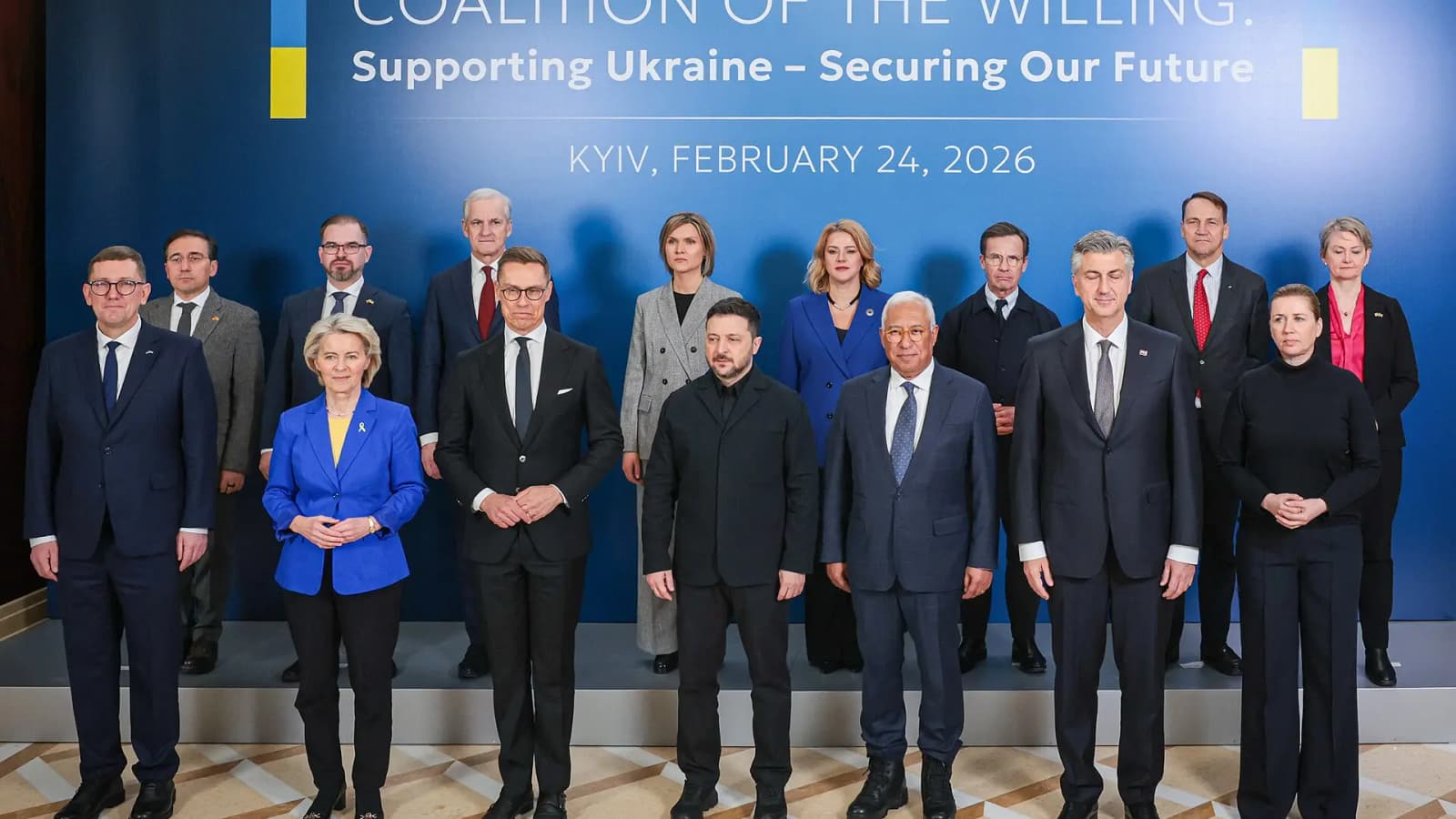
Coalition of the Willing to discuss Ukraine’s defence in Berlin
The meeting on 19 November will focus on funding Ukraine’s defence in 2027 and a common position for future peace talks, German Chancellor Friedrich Merz announced. Media reporting suggests US envoys Jared Kushner and Steve Witkoff are also expected in Berlin.

Polish-Russian border, PolandGeopolitics
 Polish-Russian border, Poland
Alleged Russian sabotage plan in Poland would have blamed Ukraine
Unnamed sources cited by the Polish newspaper Rzeczpospolita describe a mass-casualty scenario. Polish authorities confirm action in response to a credible threat, but not the specific plan described in the report.

BrusselsMilitary Aviation
Zelensky requests 40 more F-16s as lengthy repairs limit available aircraft
The Ukrainian president linked the request to the time the fighters spend undergoing inspections and repairs. Kyiv also wants additional Mirage fighters and faster deliveries of aircraft weapons.

GermanyRussia–Ukraine War
Deutsche Bank maintained ties with Russian oligarchs after sanctions
An international journalistic investigation traces the bank’s handling of wealthy Russian clients and their transfer between its divisions. Deutsche Bank says it reviewed the cases described and worked with regulators where necessary.
 English