
Brussels, BelgiumMilitary Infrastructure
NATO says undersea cable incidents in the Baltic have dropped drastically, while the Black Sea has no such mission
NATO Assistant Secretary General Christian Buck told the European Parliament that incidents involving undersea infrastructure have dropped drastically since Baltic Sentry began. On the Black Sea, he said Bulgaria, Romania and Türkiye have not asked NATO to operate there.
NATO Assistant Secretary General for Operations Dr Christian Buck told the European Parliament's Security and Defence Committee (SEDE) on 3 November 2026 that incidents involving critical undersea infrastructure in the Baltic Sea have dropped drastically since the Baltic Sentry mission began. EU Perspectives, which covered the hearing, reported his remarks.
"Since its launch, there has been a drastic reduction in incidents related to critical undersea infrastructure," Buck said, as quoted by the outlet. The last undersea cable incident was in January 2026 and, according to him, it was "limited in scope and impact."
Sabotage has become too costly
According to Buck, sabotage is now "simply too costly, in terms of reputation and possibly also economically" for those behind it. He also stressed the importance of identifying perpetrators: "Attribution is a deterrence."
NATO launched Baltic Sentry in January 2025 after a series of damaged cables and pipelines in the Baltic Sea at the end of 2024. Buck said the United States currently has no maritime or air assets in the mission. The patrol aircraft are European, although the command is led by an American four-star general.
Who pays the bill
Latvian MEP Mārtiņš Staķis (Greens/EFA) called the mission a success but said its costs were unfair. "Is there any way we could make those who were responsible actually pay this bill?" he asked.
Buck replied that this is a question of jurisdiction, which NATO as an alliance does not possess. He said courts might one day award damages, and that EU sanctions can raise the cost for perpetrators acting with state backing.
Why there is no such mission in the Black Sea
MEPs Riho Terras (EPP, Estonia) and Nathalie Loiseau (Renew Europe, France) asked about the Black Sea. Buck replied that Bulgaria, Romania and Türkiye have not asked NATO to operate there and that the problem in the Black Sea is "quite different in the moment." He said NATO follows the situation and holds exercises but does not operate in the region.
Flank found no other media coverage of the hearing, nor a published recording or transcript. The quotes are as reported by EU Perspectives.
What it means
Buck's answer shows that the decision on the Black Sea rests above all with the three littoral allies. In the Baltic, NATO can send ships from many countries. In the Black Sea, Türkiye has applied the wartime provisions of the Montreux Convention since February 2022 and has urged all countries not to send warships through the Straits. As a result, allies from outside the region in practice do not bring warships into the Black Sea.
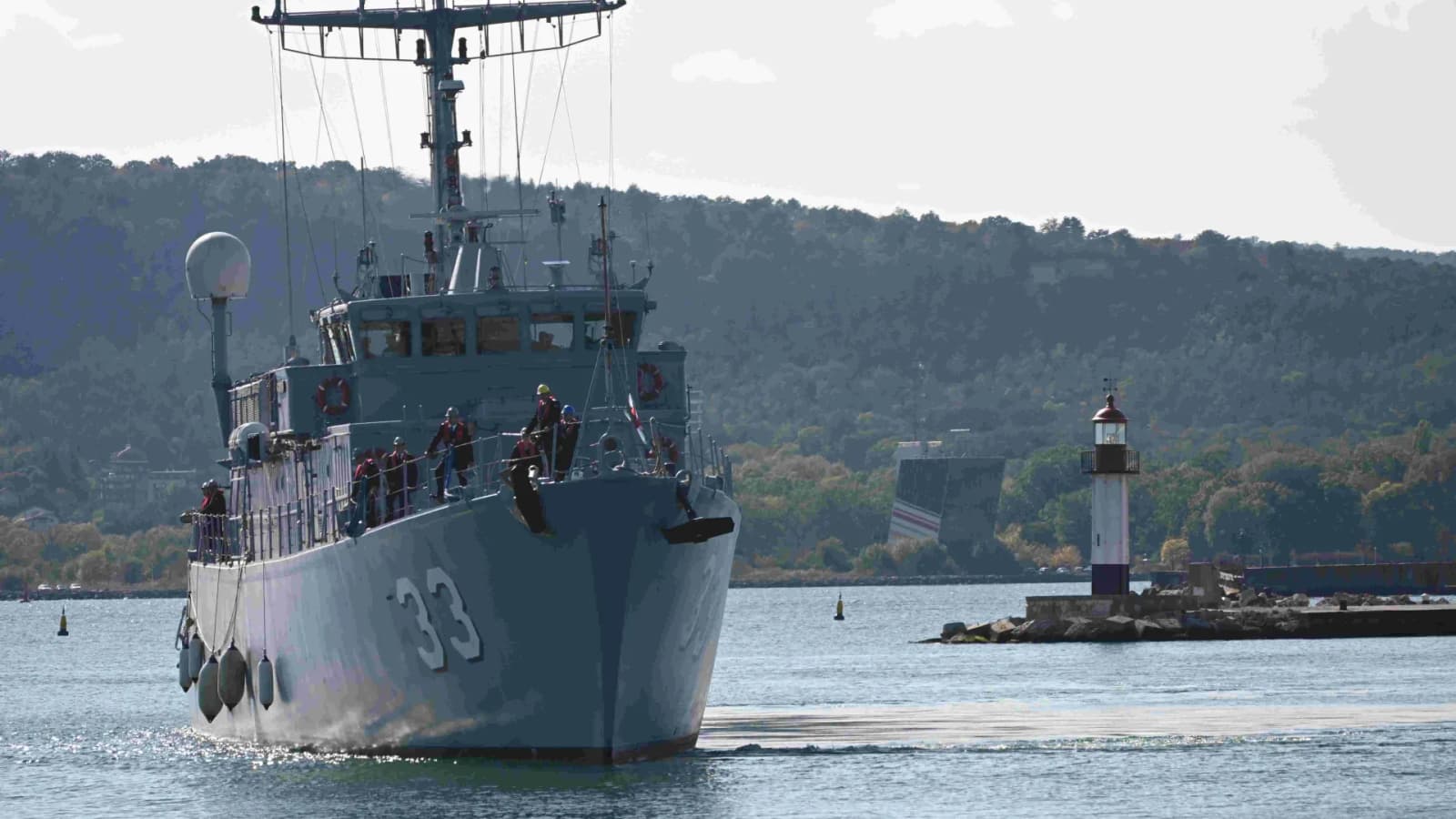
That is why Bulgaria, Romania and Türkiye set up their own mine countermeasures group. Monitoring of critical undersea infrastructure is to be added to its tasks, but the addendum to the three countries' memorandum is still awaiting ratification by the Turkish parliament.
The threat itself is also different. In the Baltic, the problem was ships dragging their anchors along the seabed and cutting cables. In the Black Sea in October, drones struck merchant ships in Bulgaria's exclusive economic zone and off the Romanian coast. Patrols modelled on Baltic Sentry would not answer such attacks directly.
The pressure to act is growing nonetheless. On 22 October the European Parliament called on the EU to consider a naval operation in the Black Sea. For Bulgaria, the lesson is that such protection will not come on its own. It depends on whether Sofia, Bucharest and Ankara ask for and agree on such a role for NATO, or expand their own group.
Sources
1 primary or official1 secondary report
Primary / Official
EU Perspectives · euperspectives.eu
Baltic Sentry makes sabotage too costly for Russia, NATO man tells lawmakersPrimary sourceOther
Secondary reporting
Coffe Report (X) · x.com
NATO says Baltic cable incidents have dropped dramaticallyOther
Linked to this story
 Romania
 Türkiye
 NATO
Related topics
VarnaNaval Warfare
Mine countermeasures group back in Varna; undersea infrastructure role awaits Turkish ratification
In 14 days at sea the ships covered 850 nautical miles. The next activation runs from 6 to 18 November with exercise Poseidon.
 English