
SwedenMilitary Aviation
 Sweden
The future of air combat is here: Artificial Intelligence takes control of a Gripen E fighter jet
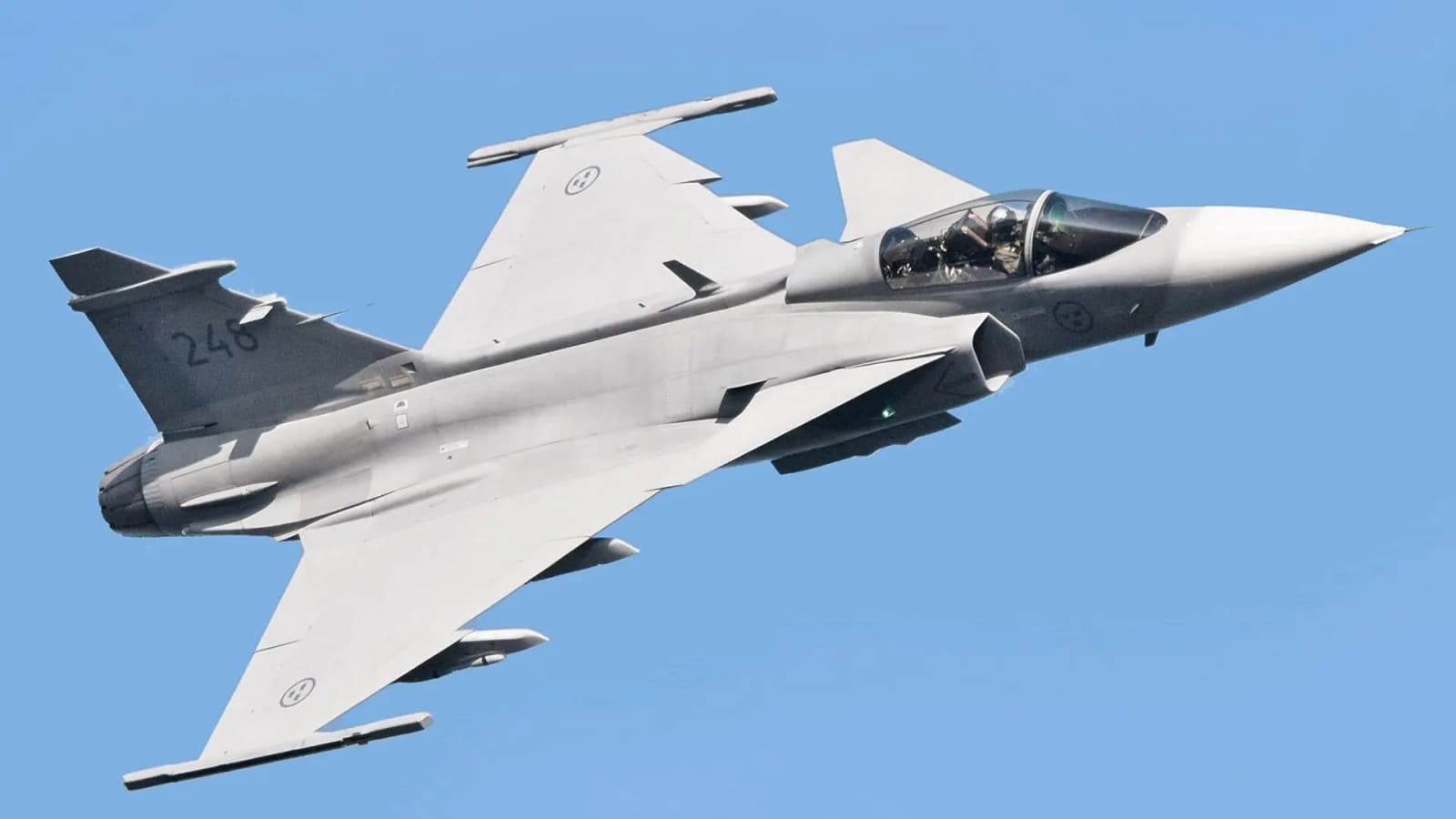
The Swedish manufacturer says the agent, trained with millions of hours in simulation, autonomously controlled the fighter in real test flights. Details of the flights have not been disclosed, and the technology is not yet ready for service.

Sweden’s Saab says it has developed its own artificial intelligence agents for air combat and tested them in flight on a Gripen E fighter. During the trials, the agent autonomously controlled the aircraft in beyond-visual-range (BVR) combat scenarios, the company said in a release on 3 November 2026. The news was picked up on 15 November by the Polish military outlet Polska Zbrojna.
Saab has not disclosed when or how many flights took place, nor details of the scenarios and results. The trial data come from the manufacturer and have not been independently confirmed.
Millions of hours in simulation
The agents were created in Saab’s Advanced Programs unit as part of the AI Fighter Pilot Academy initiative. According to the company, they are trained in a simulated environment across a range of air combat scenarios and have accumulated millions of hours of virtual flight. Their actions are evaluated against defined objectives, which is how the agents learn to adapt. Beyond-visual-range air combat is the first capability validated in real flight.
Saab says the agents, the training environments and the tools used to develop and evaluate them are all its own. Computing capacity also comes from Sferical AI, a Swedish sovereign AI initiative of which Saab is a founding partner. “We have not only built our own AI agents, but we have also flown them,” said Peter Nilsson, head of Advanced Programs at Saab’s business area Aeronautics. According to him, future air combat will be fought by networks of crewed and uncrewed systems working together.
In the cockpit or in an uncrewed aircraft
According to Saab, the agents can support the pilot in the cockpit or fly an uncrewed platform operating alongside crewed fighters. The company stresses that safety and control have been built into development from the outset and does not present the trials as readiness for service. It will continue to expand the agents’ capabilities and fly them in more scenarios.
Saab points out that the Gripen E’s software-defined architecture allows new AI software to be integrated and flown on the production fighter without the need for a dedicated experimental aircraft.
After the trials with Helsing
This is not the Gripen E’s first flight with artificial intelligence. In May and June 2025, Saab and the German company Helsing carried out three flights with Helsing’s Centaur agent under Project Beyond, funded by the Swedish Defence Materiel Administration (FMV). The agent then flew complex manoeuvres in beyond-visual-range scenarios and cued the pilot when to fire, and in the third flight it operated against a crewed Gripen D. The pilot stayed in the cockpit and could take control at any time. What is new in the current trials is that the agent was developed entirely by Saab.
The Gripen E is the latest version of the Swedish multirole fighter. It is in service in Sweden and Brazil, and according to Polska Zbrojna, Thailand, Colombia and Ukraine have also ordered this version.
In Flank’s assessment, the announcement is part of the race for next-generation fighters, in which manufacturers are showing that they can combine crewed and uncrewed aircraft. For Saab, its own agent means control over a technology it had previously tested with an outside partner.
Why This Matters for Bulgaria
Bulgaria chose the F-16 Block 70 after also considering the Gripen in 2018–2019, and is building its fleet now. AI in the cockpit and uncrewed aircraft operating alongside crewed ones will shape the next generation of fighters, including in the allied air forces that Bulgaria’s F-16s will operate with.
Sources
2 primary or official1 secondary report
Primary / Official
Saab · saab.com
Saab unveils its AI agents for future fighter systemsPrimary sourceOtherSaab · saab.com
Saab achieves AI milestone with Gripen EPrimary sourceOther
Secondary reporting
Polska Zbrojna · polska-zbrojna.pl
AI za sterami GripenaOther
Linked to this story
- AircraftJAS 39 Gripen
Related topics
UkraineMilitary Aviation
 Ukraine
 expects first Gripen fighters from Sweden in first half of 2027
Ukrainian Air Force spokesperson Yuriy Ihnat gave this timeframe, according to OFFNews. Earlier reports distinguish between the planned provision of Gripen C/D aircraft and the separate purchase of 16 new Gripen E fighters, with deliveries due to begin in 2029.

SofiaProcurement
Second batch of eight F-16 Block 70s slips to 2030; 3D radars in 2028
On Air Force Day Minister Stoyanov confirmed a delay to the second batch from the original 2027 target.
 English