BulgariaAnalysis
Europe shifts course: More weapons, higher spending, but no consensus
After the Abu Dhabi talks and strikes on ships in the Black Sea, including in Bulgaria's economic zone, European leaders hardened their tone towards Russia and backed it with money, procurement and requests for more allied forces. The sharpest tone came from the Baltic states; the cracks came from budgets and from capitals keeping their ties with Moscow.

Contents
The week of 11–18 November 2026 brought together three processes that had so far moved separately: a harder tone from European leaders towards Russia, new money and procurement for defence, and requests for a permanent allied presence on the eastern flank. The frame was set by the informal European Council and the European Political Community meeting in Dublin (12–13 November), the EU Foreign Affairs Council (16–17 November, including in its Defence format), the Ukraine Defence Contact Group meeting in Brussels (17 November) and the upcoming Coalition of the Willing meeting in Berlin (19 November).
In Flank's assessment, the common denominator is not "militarisation" in the sense of preparing for war, but a shift to a logic in which defence is planned as a lasting rather than a temporary task. The week also showed how unevenly individual capitals are moving. Two factors explain why the tone hardened now: what is being discussed in the talks on Ukraine, and what is happening in the Black Sea.
Abu Dhabi: talks that also touch Europe's security
On 10–11 November Russia and Ukraine held US-mediated talks in Abu Dhabi. They agreed a prisoner exchange (1,500 on each side, according to Euronews Bulgaria) but no ceasefire, including in the Black Sea. On 12 November Vladimir Putin offered US envoys Steve Witkoff and Jared Kushner a temporary humanitarian pause in Kostiantynivka, but repeated Moscow's claims to four Ukrainian regions and called the deployment of foreign troops in Ukraine "completely unacceptable".
What matters for European capitals is that issues beyond Ukraine appeared in the talks. According to Tsahkna, Russia's chief negotiator Vladimir Medinsky referred to the 2021 ultimatum. The German daily Bild, cited by Club Z, reported proposals attributed to Moscow for Finland to leave NATO and for no Alliance bases in Estonia, Latvia and Lithuania; this comes from a single source chain that Flank has not independently confirmed. Zelensky said US negotiators asked for the first time whether Ukraine would withdraw from Donbas in exchange for NATO membership.
The EU's response was to ask for a seat at the table. A US delegation briefed European partners on the Moscow talks at an airfield in Dublin, and EU leaders agreed a negotiating team: the E5 (France, Germany, Italy, Poland and the United Kingdom) together with the EU institutions. On 17 November Kushner announced progress towards an agreement, without giving terms.
The Black Sea: when the war reaches Bulgarian waters
The second factor is the sea. According to the Romanian Naval Authority, on 17 November the gas carrier GAS HUSKY, carrying almost 3,400 tonnes of propane and a crew of 19, was hit by drones about 55 nautical miles south-east of Varna, in Bulgaria's exclusive economic zone. On the evening of 13 November a drone struck the cargo ship LARISSA 1 in Romanian territorial waters off Sfântu Gheorghe, with no casualties, and on 14 November Maritime.bg reported a chemical tanker hit off Sulina, a report from a single source.
Romanian Foreign Minister Dan Neculăescu told the EU Council of four drone alerts in 24 hours and three ships hit over the weekend, calling the situation "unacceptable". Bucharest is pressing for faster activation of the Black Sea Maritime Security Centre, planned with command centres in Constanța and Varna. Turkey is talking to Russia, Ukraine, Bulgaria and Romania about shipping safety, and Moldova closed its airspace after drone incursions. In Flank's assessment, these incidents turn the war from a problem "over there" into a direct risk to the trade, crews and coasts of EU and NATO states, and they are the most visible driver of harder positions in the region.
The rhetoric: Ukraine's security as Europe's security
French President Emmanuel Macron set out the new tone most clearly. "Helping Ukraine to defend itself means protecting France and the French," he wrote on 14 November after Dublin, calling attempts to limit support a "spirit of defeat". France's declaration on the key principles of European security was also presented in Dublin.
The sharpest wording came from Germany: Martin Schäfer, director of defence policy at the German Ministry of Defence, reportedly called populists who would abandon NATO and Ukraine "traitors", according to UK Defence Journal. At the same forum in Oslo, Norway's Chief of Defence General Eirik Kristoffersen said that silence about threats is more dangerous than public alarm. NATO Deputy Secretary General Radmila Shekerinska called Russia the most significant long-term threat and warned of arson, sabotage and drone incursions.
EU High Representative Kaja Kallas said she sees no readiness on Russia's part for serious negotiations. German Defence Minister Boris Pistorius and British Defence Secretary Wes Streeting defended Ukraine's strikes inside Russia after US Under Secretary of Defense Elbridge Colby criticised them as ineffective and risking escalation. Bulgaria took a more cautious but clear position on one issue: Prime Minister Rumen Radev called a return of NATO to its pre-1997 borders "unthinkable and unrealistic".
Why the sharpest tone comes from the smallest states
The most categorical statements of the week came from the Baltic states. The Estonian Foreign Ministry said Moscow's demands have not changed since its 2021 ultimatum and that concessions would reward aggression. Foreign Minister Margus Tsahkna called it "absurd" for Europeans to discuss Finland's NATO membership with Moscow. Estonian Defence Minister Martin Herem warned that a winding-down of the war in Ukraine could free up Russian forces and raise the risk for the Baltic region and, according to Ukrinform, said Ukraine should not give up territory in exchange for NATO membership. Latvian Prime Minister Andris Kulbergs told Euronews that Russia is in no position to dictate terms because Europe is "bigger in size, in economy and militarily". Lithuanian Foreign Minister Kęstutis Budrys said Russia shattered Europe's security order and "must not be allowed to rewrite it".
In Flank's assessment, the reason for this tone is above all geographic and practical, not temperamental. The three states border Russia or Belarus directly, have no strategic depth and small armies that cannot hold on their own. Their security depends on whether allies arrive in time, so for them rhetoric is part of deterrence: it keeps NATO's attention and keeps the cost of any concession visible. The week also gave concrete reasons: the proposals on Baltic bases attributed to Moscow concern them directly, and Estonia said it will close all border crossings with Russia from 1 December after an attempted arson attack on a defence company that it attributes to Russian military intelligence, and Lithuania's Chief of Defence proposed physical barriers on the border with Kaliningrad.
Size alone, however, does not explain the position. Slovakia, also a small state, took the opposite line: Prime Minister Robert Fico said "a clear 'no' to war and war loans" and "not a cent for weapons", while keeping humanitarian aid. Proximity to Russia, historical experience and domestic politics are decisive, not population.
From words to money
The week brought a series of concrete financial decisions. The United Kingdom announced £240 million for Ukraine's air defence, including over 1,000 short-range air defence missiles. Germany will contribute $300 million to a new PURL package, prioritising Patriot missiles, will supply radars for Ukraine's future Freyja system, and is preparing joint production of unmanned ground systems with Ukraine. Sweden added around SEK 720 million, and Minister Pål Jonson said Sweden's draft 2027 budget includes €4 billion in military support for Ukraine. Ukraine, Sweden and the UK signed a letter of intent on weapons for Ukraine's Gripen fighters, and Ukraine and Finland a memorandum on joint defence production. NATO Secretary General Mark Rutte welcomed new pledges of hundreds of millions of dollars to PURL.
At EU level, the European Commission paid Ukraine €1.71 billion for drones, ammunition and air defence, and Ursula von der Leyen and Kaja Kallas announced on 18 November a proposal for a further €45 billion for 2027, which von der Leyen said would cover two thirds of Ukraine's needs for the year. The EU also adopted more than 140 new sanctions listings against Russia, and Kallas said a 22nd sanctions package is coming.
The shift is also visible in national budgets. Defence Minister Dimitar Stoyanov proposed €3.151 billion for Bulgaria's defence in 2027, 2.23% of GDP and 17% more than in 2026; this is a draft, not an adopted budget. Deputy Minister Lyubomir Monov presented the plans for a gradual increase in spending in Brussels. The government approved joint purchases under the EU's SAFE mechanism (155 mm ammunition with France, up to 1,040 military vehicles from Italy and up to 20 counter-drone systems with Spain) and proposed to parliament five more IRIS-T SLM systems and 57 CAESAR howitzers. Hungary said it plans to channel a €5.4 billion SAFE loan into defence until 2030.
Presence and infrastructure on the eastern flank
Flank states asked for more allied forces and offered to pay for them. Lithuania has submitted proposals to the US for a permanent American base, and President Gitanas Nausėda welcomed the return of US rotational forces; Budrys called the German brigade in Lithuania a strategic commitment to collective defence. Romania, according to President Nicușor Dan, has offered to cover part of the costs of US troops and wants more forces with "greater firepower". Washington's response to the Lithuanian and Romanian proposals is not known.
Poland began expanding Wrocław airport to receive US forces and is seeking US approval for Tomahawk cruise missiles; Latvia and Poland discussed possible Polish support for the Latvian armed forces. Norway, Sweden, Denmark, Finland and Iceland began work on a common defence agreement within NATO, focused on moving forces quickly across borders.
Where the line cracks
The week was not one-directional. Polish Prime Minister Donald Tusk said Poland is pausing its PURL contributions for now, citing a large budget deficit, part of which is due to defence spending. Bulgaria confirmed it is making no new deliveries from army stocks and will not take part in the additional €70 billion requested by Kyiv. Foreign Minister Velislava Petrova said Bulgaria prefers a stronger diplomatic focus to continued military aid but cannot give up its support, and asked for two Bulgarian-owned banks to be removed from the sanctions lists. Sofia backed the French declaration on European security with reservations to its preamble.
Slovakia and Hungary reported extended US exemptions from sanctions for deals in Russian oil and gas, according to TASS, without separate confirmation from the US Treasury. The Hungarian defence minister backed stronger European capabilities but called for dialogue and alignment with NATO's plans. Finnish President Alexander Stubb, for his part, urged European leaders to talk directly to Vladimir Putin and called leaving contacts with Russia entirely to Washington irresponsible.
In Flank's assessment, this is the real limit of the "military logic": the states spending most on their own defence are the first to hit a budget ceiling on aid to Ukraine, and some capitals are still protecting their energy ties with Russia. The rhetoric is more united than the finances.
Russia's reading
Moscow presents the European decisions as escalation. Russian Foreign Ministry spokeswoman Maria Zakharova said Europe "would probably be safer without NATO", and Foreign Minister Sergei Lavrov called the presence of French troops in Ukraine "direct participation" in the war. French Foreign Minister Jean-Noël Barrot replied that France is not a party to the war. Kremlin spokesman Dmitry Peskov denied that Russia had asked Finland to leave NATO, and Stubb also dismissed the report. These are the parties' claims, and Flank presents them as such.
According to Bloomberg sources cited by Digi24 and OFFNews, Moscow has offered restrictions on NATO's presence in states admitted after 1997, Bulgaria among them, in exchange for cutting Russian forces in Kaliningrad Oblast. The offer has not been officially confirmed.
What to watch
First, the Coalition of the Willing meeting in Berlin on 19 November: whether funding for Ukraine's defence in 2027 and a common negotiating position are agreed. Second, how the proposed €45 billion EU loan and the 22nd sanctions package are received, given resistance among member states to parts of it. Third, whether Poland resumes its PURL contributions and how Washington answers Lithuania's and Romania's proposals. Fourth, the votes on Bulgaria's defence budget and on the IRIS-T, CAESAR and SAFE projects in the National Assembly.
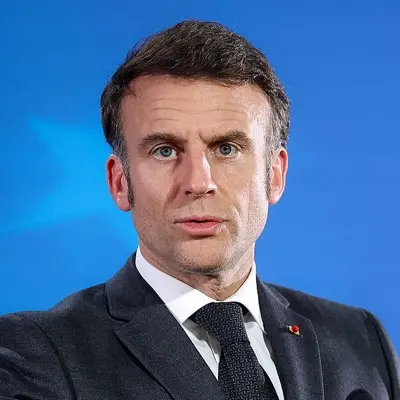
Emmanuel Macron@emmanuelmacron
French President Emmanuel Macron says in an address to the French people that “helping Ukraine defend itself means protecting France and the French”. According to him, at the meetings in Dublin European leaders showed unity around two priorities: helping Ukraine get through the winter and working with it towards a just and lasting peace.
Macron says Vladimir Putin does not want to negotiate and is betting on strikes against civilians and Ukraine’s energy system. He calls for financial support to be maintained and describes attempts to ration Ukraine’s means as “the spirit of defeat”. According to him, 42 countries approved a French-initiated declaration on the principles of European security, and the Coalition of the Willing will meet in Berlin on Thursday.
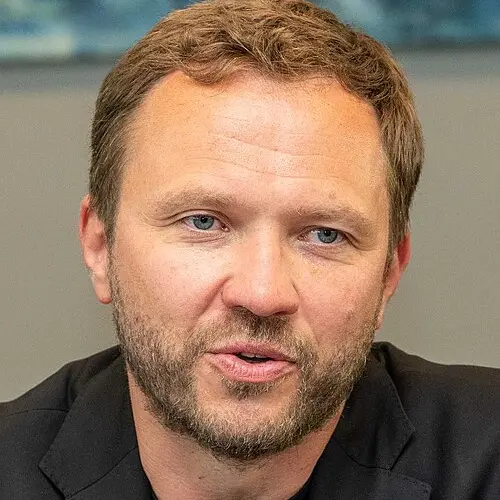
Margus Tsahkna@tsahkna
Tsahkna: discussing Finland's NATO membership with Moscow is absurd
Estonian Foreign Minister Margus Tsahkna said Russia is refusing a ceasefire and escalating its attacks against Europe, yet Europeans are somehow expected to discuss Finland's NATO membership with Moscow. "That is absurd," he wrote.
Tsahkna said Putin does not get to decide for NATO or the EU, and as long as Russia refuses peace, the response must be to increase the pressure. The post is from the day of the EU Foreign Affairs Council.

Euronews@euronews
Latvian PM: Russia is in no position to set terms for Europe
Latvian Prime Minister Andris Kulbergs told Euronews that Russia is in no position to set terms for Europeans to agree to in peace negotiations. "We are bigger in size, in economy, and militarily," he said.
Kulbergs also told Europe Today that Russia is "losing in Ukraine".
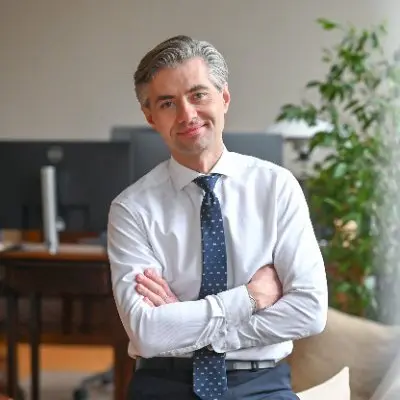
Kęstutis Budrys@budryskestutis
Budrys: German brigade in Lithuania is a strategic commitment to NATO defence
Lithuanian Foreign Minister Kęstutis Budrys said after meeting Bundestag Defence Committee Chair Thomas Röwekamp in Vilnius that the German brigade in Lithuania is a strategic commitment to NATO's collective defence and "a powerful signal of Allied unity".
Budrys named the priorities as keeping pressure on Russia, Ukraine's path to EU membership and Europe's ability to withstand aggression, coercion and disinformation. "Russia shattered Europe's security order. It must not be allowed to rewrite it," he added.
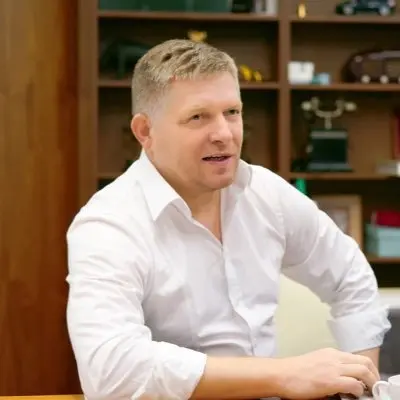
Robert Fico@robertficosvk
Slovak Prime Minister Robert Fico says “a clear no to war and war loans” and “a clear yes to peace”. According to him, Europe is finally starting to talk about peace, and Slovakia will support peace talks, not further funding of the war.
Fico says Slovakia will continue providing humanitarian aid to Ukraine, but “not a single cent for weapons and killing”.
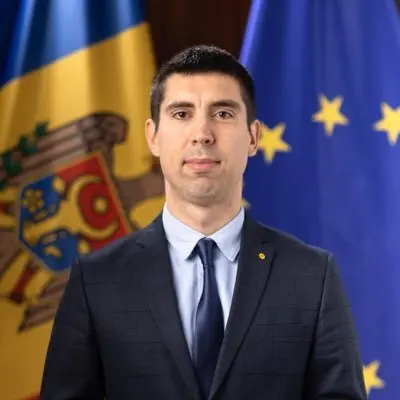
Mihai Popșoi@mihaipopsoi
Popșoi condemns violation of Moldova's airspace by a Russian Shahed drone
Moldovan Deputy Prime Minister and Foreign Minister Mihai Popșoi strongly condemned the violation of the country's airspace by a Russian Shahed drone reported over the capital, Chișinău.
Popșoi called it a serious breach of Moldova's sovereignty and a direct threat to the safety of its citizens, and urged Russia to stop actions that endanger Moldova and regional security.
NATO@nato
Rutte: Allies pledge hundreds of millions more to PURL at Ukraine contact group
NATO Secretary General Mark Rutte welcomed, at the Ukraine Defence Contact Group (UDCG) meeting in Brussels, hundreds of millions of dollars of additional pledges to the PURL programme and announcements of further military aid, including air defence and ammunition.
"We are doing our part to ensure peace talks will be successful, and that we can finally bring this war to a just and lasting peace," Rutte said. For any peace to hold, he added, Ukraine will need to be able to defend itself in the future too.
Sources
23 primary or official35 secondary reports
Primary / Official
Emmanuel Macron (X) · x.com
Address to the French people after DublinPrimary sourceOtherÉlysée · elysee.fr
Declaration on key principles of European securityPrimary sourceOtherRobert Fico (X) · x.com
A clear "no" to war and war loans, a clear "yes" to peacePrimary sourceOtherMargus Tsahkna (X) · x.com
Discussing Finland's NATO membership with Moscow is absurdPrimary sourceOtherEstonian Ministry of Foreign Affairs (X) · x.com
Russia's demands have not changed since 2021Primary sourceOtherKęstutis Budrys (X) · x.com
The German brigade in Lithuania is a strategic commitment to NATO's collective defencePrimary sourceOtherGitanas Nausėda (X) · x.com
Welcoming the return of US rotational forces to LithuaniaPrimary sourceOtherLatvian Ministry of Defence (X) · x.com
Latvia and Poland discuss defence cooperationPrimary sourceOtherKaja Kallas (X) · x.com
Over 140 new sanctions listings against RussiaPrimary sourceOtherKaja Kallas (X) · x.com
A new €45 billion loan for Ukraine for 2027Primary sourceOtherUrsula von der Leyen (X) · x.com
A further €45 billion to cover two thirds of Ukraine's needs for 2027Primary sourceOtherUrsula von der Leyen (X) · x.com
European negotiating team: E5 with the EU institutionsPrimary sourceOtherNATO (X) · x.com
Secretary General welcomes strong Allied support at the Ukraine Defence Contact GroupPrimary sourceOtherPål Jonson (X) · x.com
Sweden provides an additional SEK 720 million in military support to UkrainePrimary sourceOtherMinistry of Defence of Ukraine (X) · x.com
Letter of intent with Sweden and the UK on weapons for Ukraine's GripenPrimary sourceOtherPolish Ministry of Foreign Affairs (X) · x.com
Sikorski: the biggest sanction is the loss of the European energy marketPrimary sourceOtherGOV.UK · gov.uk
More than 1,000 air defence missiles for Ukraine as UK delivers £240 million in winter supportPrimary sourceOtherGOV.UK · gov.uk
Atlantic Future Forum 2026: co-hosts statementPrimary sourceOtherMinistry of Defence of Bulgaria · mod.bg
Current EU issues discussed at the Foreign Affairs Council with defence ministersPrimary sourceOtherCouncil of Ministers of Bulgaria · gov.bg
Radev: Bulgaria supported the French initiative on European security with reservations to the preamblePrimary sourceOtherMinistry of Defence of Hungary · defence.hu
Strengthening Europe's security is our shared responsibilityPrimary sourceOtherMinistry of Defence of Hungary · defence.hu
Another step in defence capability developmentPrimary sourceOtherEuropean Commission · enlargement.ec.europa.eu
Ministers from the EU, Black Sea, South Caucasus and Central Asia advance cooperation on cross-regional securityPrimary sourceOther
Secondary reporting
- Other
- Other
OFFNews · offnews.bg
Cabinet approves purchase of five air defence systems and self-propelled howitzersOtherUkrinform · ukrinform.net
Germany to contribute $300m to new PURL package with Patriot missilesOtherUkrinform · ukrinform.net
Germany to supply Ukraine with new radars for future Freyja air defence systemOtherUkrinform · ukrinform.net
Ukraine should join NATO, must not give up territory in exchange, Estonian DM saysOtherUkrinform · ukrinform.net
EU allocates EUR 1.71B to Ukraine for drones, ammunition, air defence systemsOtherUK Defence Journal · ukdefencejournal.org.uk
Senior German official brands Europe's populists "traitors"OtherUK Defence Journal · ukdefencejournal.org.uk
Silence on threats is bigger danger, Norway's chief warnsOtherUK Defence Journal · ukdefencejournal.org.uk
Russia is top threat, NATO Deputy Secretary General warnsOtherDefence24 · defence24.com
We are not NATO's flank, we are the centre: Estonia's defence minister warns about RussiaOtherEuronews · x.com
Latvian Prime Minister Andris Kulbergs on Europe TodayOther- Other
News.ro · news.ro
Nicușor Dan confirms Romania offers to cover costs of US troopsOther- Other
TASS · tass.com
Poland will not contribute to PURL for now, Tusk saysOther- Other
- Other
HotNews · hotnews.ro
Pentagon number two criticises Ukraine's deep strikes; Germany respondsOtherHotNews · hotnews.ro
Stubb urges European leaders to talk directly to PutinOther- Other
- Other
Euronews България · euronews.bg
Second day of Kyiv–Moscow talks ends optimistically but without a breakthroughOtherNews.ro · news.ro
Putin intransigent with US envoys but proposes a humanitarian mission in KostiantynivkaOtherКлуб Z · clubz.bg
Bild: proposals attributed to Moscow include Finland leaving NATOOther- Other
Defence24 · defence24.com
Europe wants a seat at the negotiating table, but who will represent itOtherНова Варна · novavarna.net
Propane tanker attacked 55 nautical miles off VarnaOtherDigi24 · digi24.ro
Ship hit by a drone in the Black Sea 12 km from Sfântu GheorgheOtherMaritime.bg · maritime.bg
Greek-flagged tanker hit by a drone off SulinaOtherEuronews · euronews.com
EU ministers demand united response as Russian attacks spill beyond UkraineOtherBTA · bta.bg
Moscow says Europe would be safer without NATOOther- Other
RADOR · rador.ro
France is not a co-belligerent in Ukraine, says Jean-Noël BarrotOtherDigi24 · digi24.ro
Bloomberg sources on Moscow's offer of NATO restrictionsOther
Linked to this story
 Estonia
 Latvia
 Lithuania
 Poland
 Romania
 Russia
 Slovakia
 Ukraine
 Hungary
 Finland
Related topics

Abu DhabiRussia–Ukraine War
Russia and Ukraine agree prisoner-of-war exchange in Abu Dhabi, but no ceasefire
Two days of US-mediated talks ended with an agreement to exchange prisoners. The final arrangements have yet to be settled. No ceasefire was announced, including in the Black Sea.

MoscowRussia–Ukraine War
Putin proposed a temporary humanitarian pause in Kostiantynivka but maintained his territorial demands
The Russian president proposed a humanitarian pause but again rejected foreign troops and demilitarised zones in Ukraine. It is unclear whether the Kostiantynivka proposal has been accepted or whether implementation has begun.

Abu Dhabi, UAEMilitary Infrastructure
Proposals attributed to Moscow envisage Finland leaving NATO
According to Bild, cited by Club Z, proposals discussed in Abu Dhabi link peace in Ukraine to restrictions on NATO and changes to Moldova’s status. It is unclear whether Vladimir Putin has approved them.

United StatesRussia–Ukraine War
 United States
Zelenskyy: US asked whether Ukraine would withdraw from Donbas in return for NATO membership
The Ukrainian president said he would seek the public’s views if partners offered concrete security guarantees, support for the army and reconstruction funding. His remarks do not amount to consent to a withdrawal or an agreed deal.
 English