
BulgariaGeopolitics
Prof. Ivo Hristov after the Trump, Putin and Xi meeting: Europe has ceased to be a subject of geopolitics
The meeting of Donald Trump, Vladimir Putin and Xi Jinping in China shows that the centre of global geopolitical weight is shifting from Europe to the Asia-Pacific, Bulgarian sociologist Prof. Ivo Hristov said on the Glasove podcast. In his view the three great powers are outlining the new architecture of international relations, while Europe's leaders are losing the ability to influence global decisions on their own.

Contents
Bulgarian sociologist Prof. Ivo Hristov, who teaches at Plovdiv University, commented on the trilateral meeting of Donald Trump, Vladimir Putin and Xi Jinping in Shenzhen in a conversation with journalist Yavor Dachkov on the Glasove podcast on 19 November 2026. In his view, the meeting shows that the centre of global geopolitical weight is definitively shifting from Europe to the Asia-Pacific.
Europe is no longer the centre of world politics
Hristov described the Shenzhen meeting as a landmark event that shows the change in the global balance of power. "Europe has ceased to be a subject of the geopolitical process," he said.
According to him, the international system is increasingly arranged around three centres: the United States, Russia and China. Shenzhen, which grew within a few decades from a relatively small town into a global technology and industrial hub, is symbolic as an embodiment of China's economic rise. Hristov said the Asia-Pacific already concentrates a huge share of the world's industrial, technological and demographic momentum.
Three great powers and the new security architecture
According to Hristov, the meeting outlines a triangle in which each state has different instruments of global influence. The United States has enormous economic, technological and military potential, Russia keeps its leading position among nuclear powers, and China is becoming an economic competitor able to challenge American leadership.
He linked this configuration to Henry Kissinger's ideas, according to which relations between Washington, Moscow and Beijing are decisive for the international balance. Hristov stressed that major summits of state leaders are usually preceded by lengthy diplomatic preparation, and that public declarations do not necessarily reveal all the issues discussed.
China wants time for economic development, not a major war
According to Hristov, Beijing has reason to avoid a large-scale international conflict that would disrupt its economic development and international trade. China seeks to expand its technological and industrial influence through global markets and transport links.
He described China as one of the main beneficiaries of globalisation, which has gradually begun to challenge the economic supremacy of its Western architects. In this context he sees US restrictions on high technology and trade as part of the growing rivalry between Washington and Beijing.
Europe risks becoming the object of others' decisions
The sharpest part of Hristov's comments concerned the future of the European Union. In his view, Europe's political elites are failing to build an independent geopolitical strategy, and the continent increasingly depends on relations between the other great powers.
He outlined several possible scenarios: Europe remaining in the American geopolitical zone, reorienting towards a wider Eurasian space, fragmenting between different centres of influence, or keeping mainly its economic functions.
Hristov said China has an interest in preserving an integrated Europe because of its importance as an export market. Russia could also have a long-term interest in restoring relations with European states to avoid excessive economic dependence on China and India. The main obstacle, in his view, is the current political configuration in Europe and the deepening confrontation with Moscow.
The end of a historical cycle
Hristov described the past five centuries as a period of global expansion of European economic and political power. In his view this cycle is gradually ending as industrial and technological momentum concentrates in Asia. He linked the process to the internal contradictions of the European political system, the lack of common strategic goals and a declining capacity for independent action. The Shenzhen meeting, in his assessment, symbolises this change.
What the meeting's public results show
On 19 November Trump, Putin and Xi held a trilateral meeting on the sidelines of the APEC summit, after which a four-point joint "Declaration on Peace" was published. In it the leaders commit to dialogue on reducing nuclear risks; Ukraine is not mentioned. The publicly announced results do not confirm any agreed division of spheres of influence or a decision on Ukraine's future.
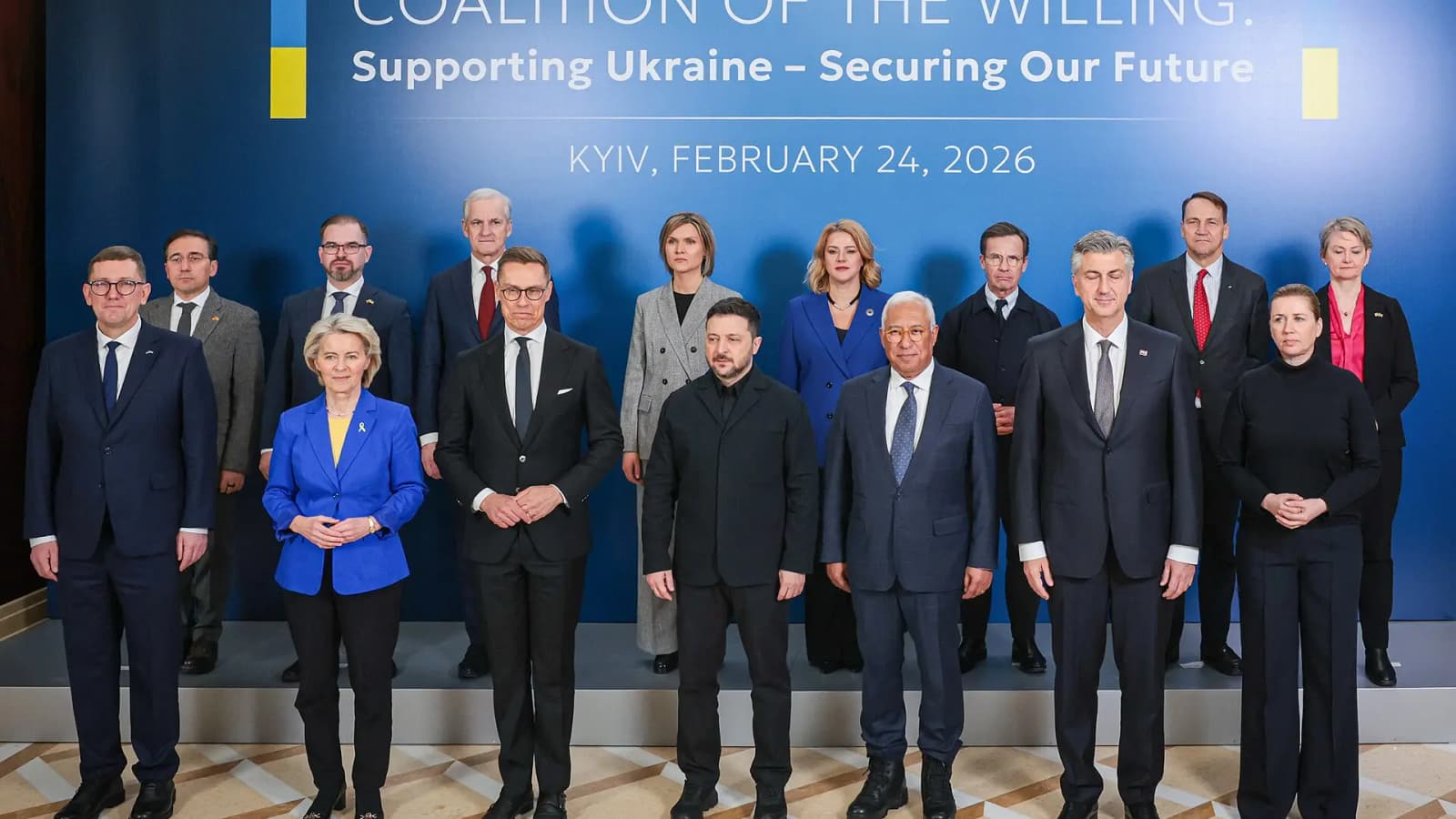
On the same day in Berlin, the Coalition of the Willing leaders discussed security guarantees for Ukraine. Flank also examines the European reactions to the Shenzhen meeting and the possible consequences for the continent in the analysis "Europe is heading for a clash with Russia".
Sources
2 primary or official1 secondary report
Primary / Official
Гласове · glasove.com
Проф. Иво Христов и Явор Дачков коментират срещата между Си, Тръмп и ПутинPrimary sourceOtherЯвор Дачков (YouTube) · youtube.com
Проф. Иво Христов и Явор Дачков коментират срещата между Си, Тръмп и ПутинPrimary sourceOther
Secondary reporting
Синхуа · english.news.cn
Declaration on Peace by the leaders of China, Russia and the United StatesOther
Linked to this story
 Russia
Related topics

Shenzhen, ChinaGeopolitics
 Shenzhen, China
Leaders of the US, China and Russia adopt a joint peace declaration that does not mention Ukraine
Trump, Xi Jinping and Putin held their first three-way meeting in Shenzhen. The declaration covers nuclear risks, energy and UN reform, but not the war in Ukraine.
Berlin, GermanyRussia–Ukraine War
 Berlin, Germany
Coalition of the Willing to discuss Ukraine’s defence in Berlin
The meeting on 19 November will focus on funding Ukraine’s defence in 2027 and a common position for future peace talks, German Chancellor Friedrich Merz announced. Media reporting suggests US envoys Jared Kushner and Steve Witkoff are also expected in Berlin.

BulgariaAnalysis
Europe is heading for a clash with Russia: Brussels raises the stakes as the US, China and Moscow reshape the world
Europe's ruling elites keep tying the continent's future to the war in Ukraine despite the growing risk of a direct military clash with Russia. While Washington, Moscow and Beijing look for a new balance of power, Brussels insists on continuing the military confrontation and widening its commitments to Kyiv. At the heart of it is the question of who will shape Europe's future security architecture, and whether Europe itself will have the decisive say over its own fate.
 English