
RussiaRussia–Ukraine War
 Russia
Ukrainian strikes may have hit refineries accounting for 55% of Russia’s petrol production
The estimate comes from analyst Sergey Vakulenko and does not mean Russia has lost half its petrol production. Ukraine’s General Staff reports a series of strikes on major refineries since 30 October.

On 12 and 13 November 2026, Ukraine’s General Staff reported a campaign against Russian refineries, extending from Omsk to Leningrad Oblast, which began on 30 October. According to an assessment by Sergey Vakulenko, a senior fellow at the Carnegie Russia Eurasia Center in Berlin, the attacks may have affected facilities accounting for around 55% of Russian petrol production. The assessment was reported by European news broadcaster Euronews and by Club Z, which cited The Moscow Times.
Ukraine’s General Staff reports strikes on refineries in seven cities
In a statement dated 12 November, published by Ukrainian military outlet ArmyInform, the General Staff lists the Omsk, Kirishi, Ryazan, Nizhny Novgorod and Yaroslavl refineries, as well as facilities in Novokuybyshevsk and Saratov. The Ukrainian command says it struck the Omsk refinery on 11 November, the Kirishi refinery overnight on 8–9 November and the Saratov refinery on 7 November.
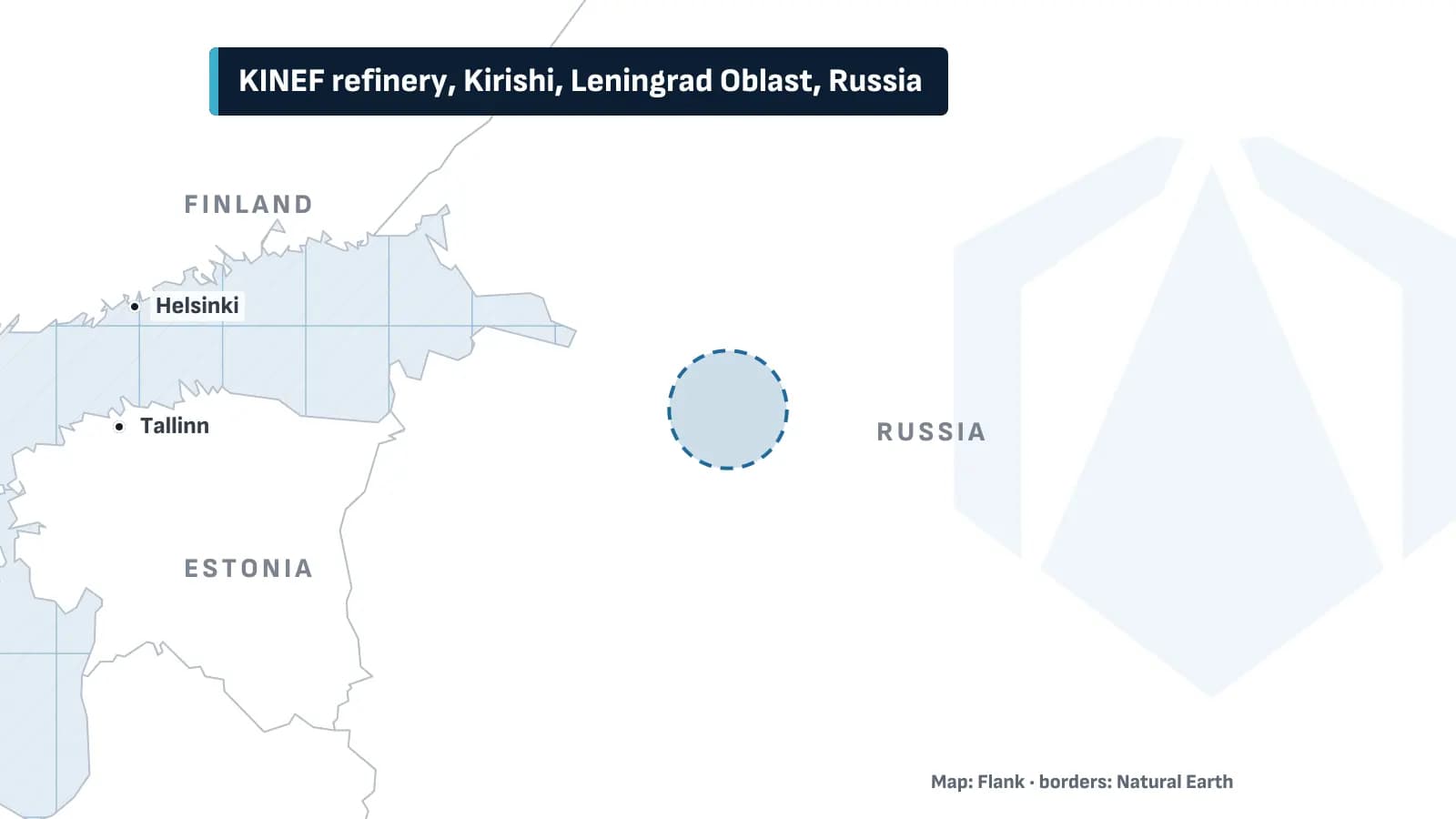
Individual drone strikes on the Yaroslavl refinery on 3 November and the Kirishi refinery on 9 November, where a fire broke out, are established incidents. They do not, however, establish the overall scale of production losses.
On 13 November, the General Staff also reported a strike the previous night on Lukoil-Volgogradneftepererabotka. The Ukrainian side reports hits on processing, loading and storage facilities. It lists four primary processing units and one hydrotreating unit, as well as a loading and unloading gantry and six tanks, each with a capacity of 2,000 cubic metres.
On the Russian side, Governor Andrey Bocharov reported fires at a facility in Volgograd’s southern industrial zone, attributing them to falling drone debris. He said four employees had been killed and two hospitalised. His statement was quoted by the publication Meduza. Bocharov did not name the refinery.
The 55% estimate refers to the facilities’ share of production, not to lost output
According to Vakulenko’s assessment, reported by Club Z, the campaign has targeted at least nine refineries. In an assessment quoted by Euronews, Sergey Vakulenko suggests that, following the strike on Volgograd, the share of Russian petrol production capacity that may be out of operation has reached 55%. This is the same analytical assessment carried by different media outlets, not a separate measurement of the damage.
It is important to distinguish between a strike on a facility, the shutdown of an individual unit and a loss of finished output. An affected refinery may continue some of its production. It remains unclear whether the 55% figure reflects the entire production contribution of the facilities attacked or only their specific affected capacity.
Club Z also relays information from Reuters sources indicating that, as of 10 November, daily oil refining in Russia stood at around 500,000 tonnes, 30% below the level at the end of October. This indicator measures total crude oil processing, not petrol output, and therefore does not confirm the 55% estimate. The underlying information and the precise basis of comparison for the decline remain unclear.
The strikes do not establish a fuel shortage for the Russian military
Ukraine’s General Staff says the strikes are intended to disrupt fuel supplies to the Russian military. It reports damage to processing facilities at Kirishi and Saratov, and says the Saratov refinery has also stopped operating. These are Ukrainian claims about the damage inflicted.
Assessing the military impact requires consideration of the duration of the disruptions, the types of fuel affected and whether supplies can be replaced by other facilities. The share of road petrol production alone does not establish a shortage of diesel or aviation fuel for the Russian armed forces.
Vakulenko warns that if Ukraine manages to carry out strikes of the same scope and intensity every two to three weeks for several months, this could substantially change the way the Russian economy functions, Club Z reports. He says problems that have so far mainly caused costs and inconvenience could develop into a serious crisis. This is a conditional forecast, not an established outcome of the current campaign. This is a developing story, and further information on repairs and actual production may become available.
Sources
2 primary or official2 independent reports1 secondary report
Primary / Official
ArmyInform · armyinform.com.ua
П’ять нафтових гігантів під ударом: Сили оборони системно нищать нафтопереробку рфPrimary sourceMilitaryArmyInform · armyinform.com.ua
У Волгограді горить пальне: Сили оборони уразили один із найбільших НПЗ росіїPrimary sourceMilitary
Independent reporting
Euronews · ru.euronews.com
Одна из крупнейших атак дронов на Россию с начала вторжения, есть жертвыVerified mediaMeduza · meduza.io
Ukrainian drone attack sparks fire at Volgograd oil refinery, killing four. Lines form at gas stations across city.Verified media
Secondary reporting
- Verified media
Linked to this story
 Ukraine
Related topics

RussiaRussia–Ukraine War
Ukrainian strikes may have affected around 30% of Russia’s oil refining capacity
Two industry sources speaking to Reuters assess the scale of disruption following attacks since late October. However, the nameplate capacity of the affected refineries is not the same as the actual loss of throughput.
Kirishi, RussiaRussia–Ukraine War
Leningrad region governor reports fire at KINEF refinery after drone attack
According to Alexander Drozdenko, the fire in Kirishi has been contained, while a woman in Vsevolozhsk died after being struck by falling debris. It is unclear whether the attack has disrupted production at one of Russia’s largest refineries.

Yaroslavl, RussiaRussia–Ukraine War
Russian Defence Ministry claims 856 drones downed overnight over Russia, Crimea and the Black Sea
Russian authorities also report damage to a refinery and two people wounded in Yaroslavl. The claimed number of interceptions has not been independently confirmed and does not allow an assessment of air defence effectiveness.
Yaroslavl, RussiaMilitary Infrastructure
Fire at Yaroslavl refinery after drone attack leaves two employees injured
Yaroslavl Region Governor Mikhail Yevrayev reported damaged infrastructure at Slavneft-YANOS, one of Russia’s largest refineries. It has not yet been established whether the fire halted oil refining.
 English